Orders, inventory and invoices: the venue losing margin between dining room and administration
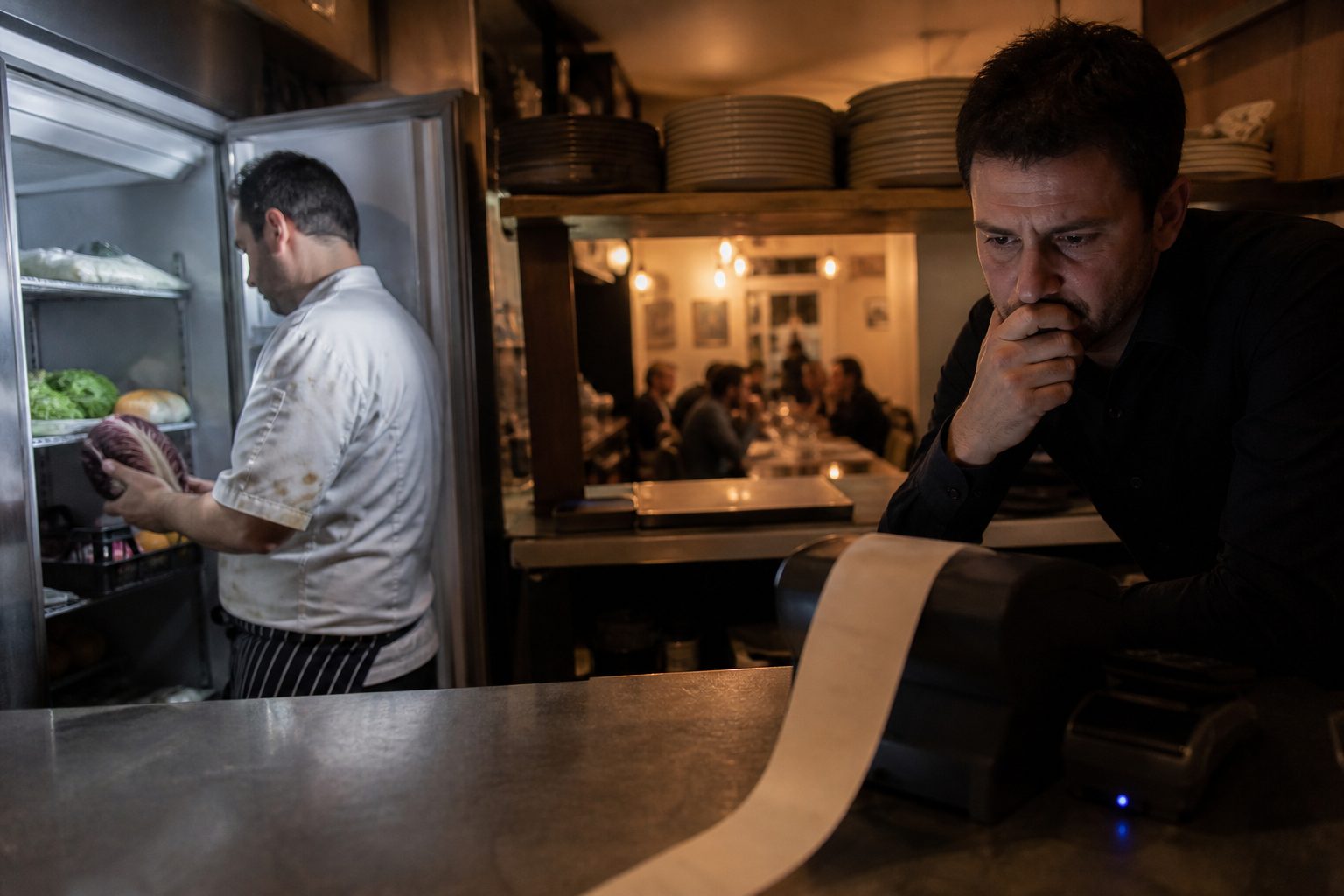
The receipt is there, the food cost isn’t
In a restaurant, in a pizzeria, in a bar, there’s one thing you know precisely: how much you took in. The till tells you to the cent, at the end of the evening. But try asking the other question, the one that decides if you’re earning or working for the supplier: how much did what you sold cost you? What is your food cost? Which dish makes you a margin and which one eats it? Here, in the vast majority of venues, silence falls. The receipt is there; the food cost isn’t.
The margin, in a venue, isn’t lost in the dining room: it’s lost in the hole between the dining room taking the money, the kitchen consuming, the inventory emptying and administration paying supplier invoices. Four worlds that don’t talk to each other. So you can have a full venue every night and close the year with little in your pocket, without understanding where it went — because between a revenue you know and a cost you don’t know, the margin is a surprise, not a choice.
This article is for those who have a venue — restaurant, bar, pizzeria, small chain — and know how much they take in but not how much they really earn, dish by dish. Let’s see the missing thread (recipe → deduction → supplier invoice), why the “we already have it” management software still doesn’t give you the numbers, what a tool that a cook or waiter actually uses looks like, and — importantly — why you don’t have to replace the till if it works: you have to connect it to the rest.
Four worlds that don’t talk
The problem is structural, and it’s made of four separate worlds each telling a piece of the story, without anyone seeing the whole thing.
- The dining room (the till) knows what you sold: ten carbonaras, fifteen margherita pizzas, twenty coffees. You have the revenue, per dish.
- The kitchen knows what it consumed: the carbonara took guanciale, eggs, pecorino, pasta. But this consumption isn’t written anywhere in a way connected to the sale.
- The inventory knows (barely) what is there and what is missing: how much guanciale is left, what needs to be reordered. Often by eye, with the inventory that “we do when we can”.
- Administration (or the accountant) knows how much you paid suppliers: the invoices from the butcher, the wholesaler, the greengrocer. They have the cost, in total — months later.
Each of these four knows a true thing. But the food cost — the cost of what you sell, to understand the margin per dish — lives only in the intersection of all four, and nobody makes that intersection. It’s the same pattern of information imprisoned in systems that don’t talk: all the data is there, but scattered, and the truth you need is in the difference between them — which nobody calculates.
The missing thread: recipe → deduction → invoice
The piece that turns four separate worlds into a useful number is a thread, and it’s simpler than it seems: connecting the recipe to the inventory deduction and to the supplier invoice.
It works like this. Every dish has a recipe: a carbonara is so many grams of guanciale, so many eggs, so much pasta, so much pecorino. When the dining room sells a carbonara, the system deducts from inventory the ingredients of that recipe — automatically, without anyone weighing anything. So the inventory updates itself as you sell, and you know what you really consume. And the ingredients have a cost, coming from supplier invoices: if guanciale cost X per kilo, and the carbonara uses so many grams, you know how much a carbonara costs you. Revenue (from the till) minus cost (from recipe × invoice prices) = margin per dish.
This thread is everything. Once it’s there, the food cost is no longer an annual mystery: it’s a number you see for every dish, every week. You know that the carbonara yields and that the elaborate dish on the menu, which seems premium, actually makes zero margin because the ingredients cost too much for the price you sell it at. And you can decide: raise the price, change the recipe, remove the dish, or keep it as a draw knowing you don’t earn on it. Deciding, instead of discovering at year-end that it doesn’t add up.
Why the “we already have it” management software isn’t enough
“But we already have the management software.” Yes, and it probably still doesn’t give you the food cost. The reason is that having the pieces doesn’t mean they are connected. Many venues have a till (which records sales), maybe an inventory software (which someone updates by hand), and the accountant holding the invoices. Three things that exist, but don’t talk to each other — and the food cost lives precisely in the connection, which isn’t there.
It’s the same misunderstanding of “we already have Power BI” that doesn’t give numbers: having the tool is not having the result. If the recipe isn’t connected to the deduction, the inventory doesn’t update with sales; if invoices don’t feed the ingredient costs, the prices the system uses are old or invented. The management software “is there”, but the number you need — how much I earn on every dish — it doesn’t produce, because nobody built the thread between the pieces. The real job isn’t buying another software: it’s connecting what you have so the food cost comes out on its own.
A tool that a cook (or a waiter) actually uses
Here is the usual hurdle of internal apps: if the tool is inconvenient for those working with it, it’s not used, and the data is garbage. And in a venue, those working with it are a cook with their hands full and a waiter running between tables — not people filling out forms.
So the parts touching staff must be invisible or extremely simple. The inventory deduction must happen on its own when the dining room enters the order: the cook must not record anything, just cook. The recipe is set once (with the chef, who knows the real grams), not with every dish. The physical inventory, when needed to correct discrepancies, must be fast — counting and confirming from a phone, not filling out a huge sheet. And the few remaining manual gestures (recording a delivery from the supplier, logging waste or a staff meal) must be a few taps.
The rule is the usual one for internal apps: if it’s slower and more inconvenient than the current method, staff bypasses it. In a venue the current method is “don’t record anything and hope”: your app must ask less than that, shifting the work to automation (deduction from the order) instead of people. If you ask the cook to weigh and record every ingredient, you’ve already lost.
The data for the owner: which is the losing dish
This whole thread serves just one screen, the one the owner looks at: the margin per dish, and the health of the overall food cost. This is where decisions that move money are made.
What the owner must see, simply:
- Overall food cost (cost of goods sold as a percentage of revenue): the number telling you if the venue is healthy. If it rises, something is eroding the margin — supplier prices, waste, dips.
- Margin per dish: which dishes yield, which don’t. Often there are surprises — the “poor” dish yielding very well, the “prestige” dish losing.
- Discrepancies: where theoretical consumption (from recipe) doesn’t match real consumption (from inventory). A guanciale disappearing more than the carbonaras sold justify is waste, a portioning error, or worse.
- Supplier price impact: when an ingredient’s cost rises, which dishes suffer, and by how much the menu must be adjusted.
This is the real dashboard of a venue, and it’s the same leap from deciding by gut feeling to deciding on numbers I talk about for dashboards — applied to the dish. With these numbers, the menu stops being a list of dishes you like and becomes a margin tool: you know what to push, what to tweak, what to remove.
How much it costs not to know the food cost
It’s worth focusing on what it costs to navigate by sight, because in a venue margins are thin and a couple of percentage points make the difference between earning and scraping by. If your real food cost is at 35% when you thought it was 30%, on a venue billing, say, €600,000 a year, that’s €30,000 in margin you thought you had and don’t — vanished into not-knowing. And it’s not a fixed number: it’s a hemorrhage that continues until you see it, because supplier prices rise and your menus stay still, and every week the hole widens a bit.
Then there are the specific costs: the dish you sell at a loss with every order (the more you push it, the more you lose), the waste in the kitchen nobody quantifies, the ingredient marked up by 20% that you haven’t passed onto the price. You don’t see any of these until you connect the four worlds. The full venue earning little is almost always a venue that doesn’t know its own food cost: it takes in a lot and doesn’t know how much of that revenue stays.
Discrepancies: where goods (and margin) disappear
There is a number worth gold and that only this thread gives you: the discrepancy between theoretical consumption and real consumption. The system, from recipes and sales, knows how much guanciale you should have consumed for the carbonaras sold. Physical inventory says how much really disappeared. The difference between the two is your waste — and in a venue waste is evaporating margin.
A high discrepancy on an expensive ingredient is a signal to read: portions too generous (the cook “eyeballs it” and overdoes it), excessive waste and scraps, errors, or — it happens — goods going out the back door. You don’t need to stand guard: you need to see the number. When a discrepancy on an expensive ingredient stands out, you go understand why, and often it’s fixed with more precise portioning or a procedure. Without the thread, this waste is invisible and continues for years; with the thread, it’s a number you can reduce.
The menu as a margin lever
Once you have the margin per dish, the menu stops being a list and becomes a lever. It’s what in catering is called menu engineering, and you don’t need a master’s degree to use it: you cross two things, how much a dish sells and how much it yields. Dishes that sell a lot and yield well are your stars: highlight them. Those that sell a lot but yield little: tweak the price or recipe, because every order costs you. Those that yield but sell little: push them (position in the menu, waiter’s recommendation). Those that don’t sell and don’t yield: off the menu.
Without food cost per dish, you make these decisions by nose, and usually make mistakes — you keep the dish you love and that loses in the menu, you remove the “poor” one that instead held up the margin. With numbers, the menu becomes a profitability tool, not a list of what you like to cook.
Don’t replace the till: connect it
A fundamental point, because it’s the mistake that (rightly) scares restaurateurs: you don’t have to replace the till. If you have a till system that works, that the staff knows, that manages orders and payments — keep it. Changing the till is invasive, expensive, and risks breaking what already runs on busy nights. Whoever proposes replacing everything with “their till that also does food cost” is often selling you a bigger problem than the one they’re solving.
What is needed is not a new till: it’s connecting the till you have to inventory and invoices, so the sales you already record feed the deduction and food cost. The till remains the heart of the dining room; the missing thread is hooked on top. It’s the same logic of not remaking the management software but connecting it: start from what works and add the missing piece, instead of overturning everything. If the current till really is a problem that’s another matter, but food cost isn’t a good reason to change it.
Small venue vs chain: two depths
How deep to go depends on your scale, and it’s worth being honest.
For a small venue, it’s often not necessary to track every gram of every ingredient. The thread on dishes and ingredients that weigh heavily — the expensive ones, the high-volume ones — is enough to have the food cost where it counts, without burdening anyone. 80% of the margin is played on 20% of ingredients: focusing there gives almost all the value with little effort.
For a chain or structured venue, the discussion broadens: food cost compared between venues (why is Milan’s 4 points higher than Rome’s with the same menu?), centralized recipe control, aggregated purchasing. Here the theme also becomes the comparison between locations, applied to catering: same food cost definitions, views by venue, to understand where margin is lost and replicate those keeping it low.
In both cases the rule is the same: start from the essential thread (recipe-deduction-invoice) on the dishes and ingredients that count, and delve deeper only where value justifies it.
A typical case: from full venue to losing dish
A typical profile, architectural, no names. Restaurant with good turnover, always full on weekends, but disappointing margin at year-end and nobody could explain it. Working till, inventory kept by eye, invoices from the accountant quarterly. Food cost? “It’ll be around 30%”, by gut feeling.
What was done. First the recipes of the main dishes, with the chef, to have theoretical consumption. Then the connection: the existing till (untouched) feeds inventory deduction via recipes, and supplier invoices feed ingredient costs. Finally the owner’s screen: overall food cost and margin per dish.
After: real food cost wasn’t the imagined 30%, it was higher, and above all it was very different from dish to dish. Two “flagship” dishes on the menu yielded almost zero because ingredients had gone up and the price had never been updated. Tweak those two prices and review two recipes, the margin improved without touching volumes. And discrepancies brought to light waste in the kitchen on an expensive ingredient. With the usual note: the value wasn’t “a food cost software”, it was connecting four worlds that were already there but didn’t talk — and bringing out a number that was previously guessed at.
Where to start
If we decided to start, the first step isn’t buying software: it’s writing the recipes of the dishes that count. Take the twenty-thirty dishes you sell the most and the most expensive ones, and with the chef put down the standard recipes — real grams, not theoretical. This, plus ingredient prices from the latest invoices, already gives you a first estimate of food cost per dish, even before connecting the till. Often these two things are enough to discover the losing dish.
The second step is looking at the numbers you have: what is the incidence of raw materials on turnover in the last few months (the accountant gives it to you)? It’s your raw overall food cost, and it tells you if the problem is serious. From there you decide where to delve deeper. You start from the menu and the till you have, not from a software demo.
It’s for you if / it’s not for you if
It’s for you if: you have a venue and know how much you take in but not how much you earn per dish; you suspect some dishes lose margin but don’t know which ones; you keep inventory by eye and it never adds up; you see supplier invoices months later, when it’s too late to react.
It’s not for you if: you have a very small, fixed menu and control everything mentally without problems; you are willing to change the till and overturn the dining room (it’s not needed, and is counterproductive); you are looking for “just a new till” — because food cost isn’t born from the till, it’s born from the thread between till, inventory and invoices.
Frequently asked questions
Do I have to change the till? No, and it’s the key point. If the till works, it connects — it’s not replaced. The sales you already record feed the deduction and food cost. Changing the till is invasive and risky, and food cost isn’t a good reason to do it.
Will the cook have to record ingredients? No: the deduction happens automatically when the dining room enters the order, via the recipe set once. Staff must not weigh or record anything during service. The only manual gestures (supplier delivery, waste, staff meals) are a few taps, not a second job.
What if recipes vary or the chef “eyeballs it”? You start from standard recipes on main dishes, covering most of the food cost. Variations and special dishes are managed with a margin of approximation: better a “fairly right” food cost on the dishes that count than perfect precision impossible to maintain. The goal is to decide better, not industrial accounting to the gram.
How do supplier invoices connect? Ingredient prices are updated from invoices (entered or imported), so dish costs reflect real and current prices, not old price lists. When a supplier raises prices, you immediately see which dishes suffer and by how much to tweak the menu.
Does it work for bars and pizzerias, not just restaurants? Yes. The principle (recipe-deduction-invoice → margin per product) applies to any venue transforming ingredients into sold products: pizzeria, bar, ice cream parlor, pastry shop. The products change, not the logic.
How often do I see food cost? With the thread connected, continuously: inventory deducts with sales, costs update from invoices. It’s no longer the annual inventory ritual, it’s a number you look at every week and correct when needed — a price, a recipe, a waste.
Is it useful even if I change the menu often? Yes, even more so: if you change the menu frequently (seasonal, daily), knowing a new dish’s food cost right away tells you what price to set it at to have margin, instead of deciding by intuition and discovering later you were losing. New recipes are set up quickly, if the system is built well.
Do the data (recipes, food cost, history) stay mine? Yes. Recipes, costs, food cost history remain yours, no lock-in. Recipes with costs are an asset of the venue: the basis for deciding prices and menus over time.
In one line
If in your venue you know the revenue but not the food cost, the margin is lost in the hole between dining room, kitchen, inventory and invoices — four worlds that don’t talk. You don’t need a new till: you need the thread connecting recipe, inventory deduction and supplier invoices, so the margin per dish comes out on its own and you discover which dish yields and which loses. Automatic deduction from the order (no work for the cook), the till you have connected instead of replaced, and a screen telling you where the venue really earns.
If you want to understand where your margin is lost and how to connect the till you have to inventory and invoices, look at the projects I’ve built or drop me a couple of lines: we start from your menu and your till, not from software to redo everything.
Antonio Trento — System Architect & AI Integrator
Is this your problem?
I design and build data, backend, interface and AI agents end-to-end. No slides: systems that run and stay yours.
You might also like
Three warehouses, one e-commerce, the reps: three 'truths' about remaining stock and orders you can't fulfill
If the site, the ERP and the reps state three different stock levels, you sell what you don't...
Read
You're deciding by gut because the numbers live in 6 tools: what it costs (and how to get ONE dashboard you actually open)
Your company's numbers live in six different tools and nobody can answer in twenty seconds. What that really...
Read